
Caring for indoor plants can be very rewarding. It brings life and freshness into your home. But, it can also be tough, especially if you’re new to it. With the right tips, you can keep your plants thriving and enjoy their benefits.
Nurturing your plants means knowing their needs. This includes the right amount of water and the perfect light. By following the best tips for indoor plant care, you can create a lush, vibrant space. This space will improve your well-being.
This article will show you the top tips for keeping your indoor plants healthy. You’ll learn everything you need to know to become a successful plant parent.
Key Takeaways
- Understand the watering needs of your plants
- Provide the right lighting conditions for your greenery
- Maintain optimal temperatures for healthy growth
- Learn how to fertilize your plants effectively
- Discover the importance of pruning and repotting
Understanding Your Indoor Plants’ Basic Needs
To keep your indoor plants thriving, it’s essential to understand their basic needs. Start by choosing the right plants for your space. The right plants can make all the difference in maintaining a healthy and vibrant indoor garden.
Choosing the Right Plants for Your Living Space
Indoor plants vary in needs. Different plants require different things. For beginners, start with low-maintenance plants like Peace Lily, Mother-in-Law’s Tongue, and Zanzibar Gem. These plants are beautiful and forgiving if you forget to water them sometimes.
Low-Light Tolerant Plants for Beginners
If your home doesn’t get a lot of natural light, don’t worry. There are plenty of plants that can thrive in low-light conditions. Some great options include:
- Snake Plant: Known for its ability to purify the air and thrive in low light.
- Pothos: A versatile, low-maintenance plant that can grow in various lighting conditions.
- ZZ Plant: This plant is almost impossible to kill and can survive in low-light environments.
Plants That Thrive in Bright Indirect Light
If your home receives plenty of bright, indirect light, you have a wider range of plants to choose from. Some excellent choices include:
- Spider Plant: Easy to care for and great for air purification.
- Dracaena: With many varieties to choose from, Dracaena can add a nice touch to any room.
- Philodendron: These plants are adaptable and can grow well in a variety of lighting conditions.
Identifying Light Requirements for Different Plant Types
Understanding the light requirements of your plants is crucial for their survival. Different plants have evolved to thrive in different lighting conditions, from the bright light of the desert to the shaded forest floor.
How to Assess Your Home’s Light Conditions
Assessing the light in your home is the first step to choosing the right plants. Observe the light in different parts of your home at different times of the day. Consider using a light meter app on your smartphone to get a more accurate reading.
Seasonal Light Changes and Adjustments
It’s also important to consider how the light in your home changes with the seasons. As the days get shorter in winter, you may need to adjust your plant care routine. This could mean moving plants to brighter areas or supplementing with grow lights.
By understanding your indoor plants’ basic needs and choosing the right plants for your space, you can create a thriving indoor garden. This garden will bring joy and freshness to your home.
The Best Indoor Plant Tips for Watering Success
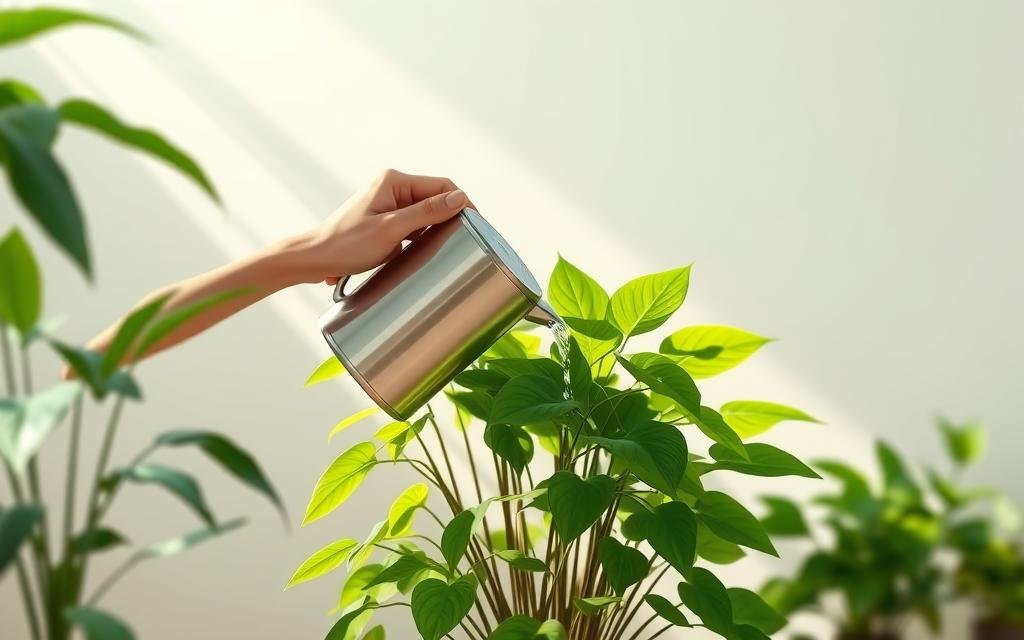
Watering your indoor plants right is key to a successful garden. It might seem tricky, but with the right tips, you can make your plants flourish.
Establishing a Proper Watering Routine
It’s important to find a watering schedule that fits your plants. You need to know what each plant needs and adjust your watering times.
The Finger Test Method for Checking Soil Moisture
The finger test is a simple way to see if your plants need water. Stick your finger into the soil up to the first knuckle. If it’s dry, it’s time to water. If it’s moist, wait a bit longer.
Watering Techniques for Different Plant Types
Each plant has its own watering needs. Succulents and cacti need less water than plants like ferns and peace lilies. Watering from the base helps roots grow deeper, making plants stronger.
Recognizing Signs of Improper Watering
Knowing when you’re overwatering or underwatering is key. Both can harm your plants.
Symptoms of Overwatering and How to Fix
Too much water can cause root rot and yellow leaves. Stop watering and let the soil dry. You can also repot your plant in new, draining soil to fix it.
Symptoms of Underwatering and Recovery Tips
Not enough water can make leaves dry and slow growth. To fix it, water well and make sure the soil is moist. Adjust your watering to avoid this in the future.
By using these plant watering tips, you can create a good watering routine. This will help your indoor plants thrive.
Creating the Ideal Environment for Thriving Indoor Plants
To keep your indoor plants thriving, you need to create the right environment. It’s not just about water and sunlight. It’s about making a space that feels like their natural home.
Maintaining Optimal Humidity Levels
Most indoor plants love a humid spot, between 40-60% humidity. But homes can get dry, especially in winter. Maintaining optimal humidity levels is key for their health.
Effective Humidity-Boosting Methods
There are ways to make the air around your plants more humid. One good method is using a humidity tray. Just put pebbles in a tray, add water, and place your pot on it. As the water evaporates, it makes the air around your plants more humid.
Grouping Plants for Improved Humidity
Another easy trick is to group your plants together. When plants are close, they help keep the air moist. This natural process keeps the humidity level stable around your plants.
Temperature Considerations for Healthy Growth
Temperature is also very important for your plants. Most houseplants like daytime temperatures between 65-75°F (18-24°C). They prefer cooler nights.
Protecting Plants from Drafts and Heat Sources
It’s important to keep your plants away from drafts. Drafts can change the temperature too fast. Also, avoid placing plants near heaters or radiators. These can dry out the soil and burn the leaves.
Seasonal Temperature Adjustments
Some plants need different temperatures with the seasons. For example, some may need cooler temperatures in winter to bloom. Learn what your plants need for each season.
By focusing on humidity and temperature, you can make a great environment for your plants. This care will lead to healthy growth and beautiful blooms. Your indoor gardening will be very rewarding.
Essential Nutrition and Maintenance for Indoor Plants
To keep your indoor plants thriving, it’s essential to understand their nutritional needs and how to maintain them properly. 🌿 Just like any living thing, indoor plants require the right balance of nutrients to grow strong and healthy.
Fertilizing Indoor Plants Effectively
Fertilizing is a critical step in providing your indoor plants with the necessary nutrients for growth. The right fertilizer can make all the difference in the health and vitality of your plants. When choosing a fertilizer, consider the type that best suits your plants’ needs.
Choosing the Right Fertilizer Types
There are various types of fertilizers available, including balanced fertilizers that provide equal amounts of nitrogen, phosphorus, and potassium (NPK). Balanced fertilizers are a good starting point for most indoor plants. You can also consider organic or synthetic fertilizers, depending on your preference and the specific needs of your plants.
“A balanced fertilizer provides your plants with the necessary nutrients for leaf growth, flower and fruit production, and root development,” says a renowned horticulturist.
“Fertilizing your plants during the growing season can significantly enhance their growth and overall health.”
Seasonal Fertilizing Schedule
It’s not just about choosing the right fertilizer; it’s also about when to fertilize. Fertilizing during the growing season (spring and summer) is crucial as it supports active growth. During the dormant season (fall and winter), you can reduce or stop fertilizing as the plants’ growth slows down.
- Spring: Start fertilizing as new growth begins.
- Summer: Continue fertilizing to support ongoing growth.
- Fall: Reduce fertilizing as growth slows.
- Winter: Stop fertilizing during the dormant period.
Repotting and Soil Management Techniques
Repotting is another essential aspect of indoor plant care. It involves transferring your plant to a new pot, usually with fresh soil, to give the roots more room to grow.
When and How to Repot Your Plants
Repotting should be done when your plant has outgrown its container or when the soil becomes depleted. Choose a pot that is only slightly larger than the current one to prevent the soil from becoming too wet. Gently remove the plant from its pot, taking care not to damage the roots.
Selecting the Best Potting Mix for Different Plants
The type of potting mix you choose can significantly impact your plant’s health. Different plants have different soil requirements. For example, succulents need well-draining soil, while tropical plants prefer a more moisture-retentive mix. Research the specific needs of your plants to choose the best potting mix.
Troubleshooting Common Indoor Plant Problems
Fixing common indoor plant problems is simpler than you might think. Indoor plants can face challenges, but knowing how to spot and fix these issues is crucial. This helps keep your plants healthy and thriving.
Identifying and Treating Common Pests
Pest infestations can be a big problem with indoor plants. Pests like spider mites, mealybugs, and fungus gnats are common. Regularly checking your plants is key to catching these pests early.
Look for white cottony patches, tiny dots, or actual insects on leaves and stems. These are signs of pests.
Natural Pest Control Solutions
For a natural way to fight pests, try neem oil or insecticidal soap. These products work well against many pests and are safer for your plants and the environment. Always read and follow the product instructions carefully.
Preventative Pest Management
Preventing pests is the best approach. Quarantine new plants before adding them to your indoor garden. This can greatly lower the risk of pests. For more tips on managing pests and other common houseplant problems, visit this resource.
Addressing Leaf Issues and Plant Diseases
Leaf problems, like yellowing or browning, can have many causes. Overwatering, underwatering, or diseases are common culprits. Accurately identifying the cause is the first step to solving the problem.
Diagnosing Yellow or Brown Leaves
Yellow or brown leaves often mean a problem. First, check your watering schedule. Too much or too little water can cause discoloration. Also, consider the light and temperature your plants get. Adjusting these can often fix the issue.
Treating Common Fungal and Bacterial Problems
Fungal and bacterial diseases can be tough to treat, but there are solutions. For fungal infections, remove affected parts and improve air flow. Sometimes, a fungicide is needed. For bacterial diseases, there’s no cure, but you can stop it from spreading by removing infected parts and practicing good hygiene.
Here are some tips for keeping your indoor plants healthy:
- Regularly inspect your plants for signs of pests or disease.
- Maintain a consistent watering schedule tailored to each plant’s needs.
- Provide appropriate light conditions for your plants.
- Keep your plants in a comfortable temperature range.
- Use natural pest control methods when possible.
Conclusion
You now know how to make your home a lush oasis. You’ve learned about picking the right plants, watering them right, and keeping the humidity and temperature just right. You’re also ready to fertilize, repot, and fix common problems.
Remember, caring for your indoor plants takes patience and attention to detail. With these 10 best indoor plant tips, you’re on your way to enjoying a thriving greenery. This will bring joy and serenity to your space 🌿.
So, start now and watch your plants grow! With a bit of care and dedication, you’ll soon be surrounded by the beauty and benefits of thriving greenery.