
Creating a smart houseplant care schedule is key to keeping your plants healthy. With a good plan, your indoor plants will get the care they need. Knowing what your plants require is the first step to a successful care schedule.
Start by checking your plants and learning how to care for them best. This will help you become a smart gardener. This article will show you how to make a care plan that fits your lifestyle.
Key Takeaways
- Understand your plants’ unique needs
- Assess your current plant collection
- Create a personalized care plan
- Learn how to provide the best indoor plant care
- Become a smart gardener with a thriving indoor garden
Understanding Your Plants’ Unique Needs
Knowing what your houseplants need is crucial for their health. Each plant has its own set of requirements. It’s important to understand these differences to create a good care plan.
Different Types of Houseplants and Their Requirements
Houseplants have different needs. For example, African violets need a lot of humidity and indirect light. On the other hand, snake plants can do well in low light and don’t need much water. It’s key to know what your plants specifically need.
- Low-light plants like Chinese Evergreen or Pothos can survive with minimal light.
- High-light plants such as Succulents or Cacti need direct sunlight to thrive.
- Moisture-loving plants like Ferns or Peace Lilies require consistent watering.
Factors That Affect Plant Care Frequency
Several factors affect how often you need to care for your houseplants. These include:
- Lighting: Plants in brighter areas may need more frequent watering.
- Watering: Overwatering can be harmful, while underwatering can stress plants.
- Humidity: Plants in dry environments may need more frequent misting.
Seasonal Changes in Plant Care Needs
Seasonal changes affect plant care needs. In the summer months, plants may need more water because of higher evaporation. In contrast, winter months may require less water as plants grow slower.
By understanding these factors and adjusting your care schedule, you can ensure your houseplants get the right care at the right time.
Assessing Your Current Houseplant Collection
Starting a smart houseplant care schedule begins with assessing your collection. You need to know each plant’s needs, spot any stress signs, and group similar plants together.
Cataloging Your Plants and Their Specific Requirements
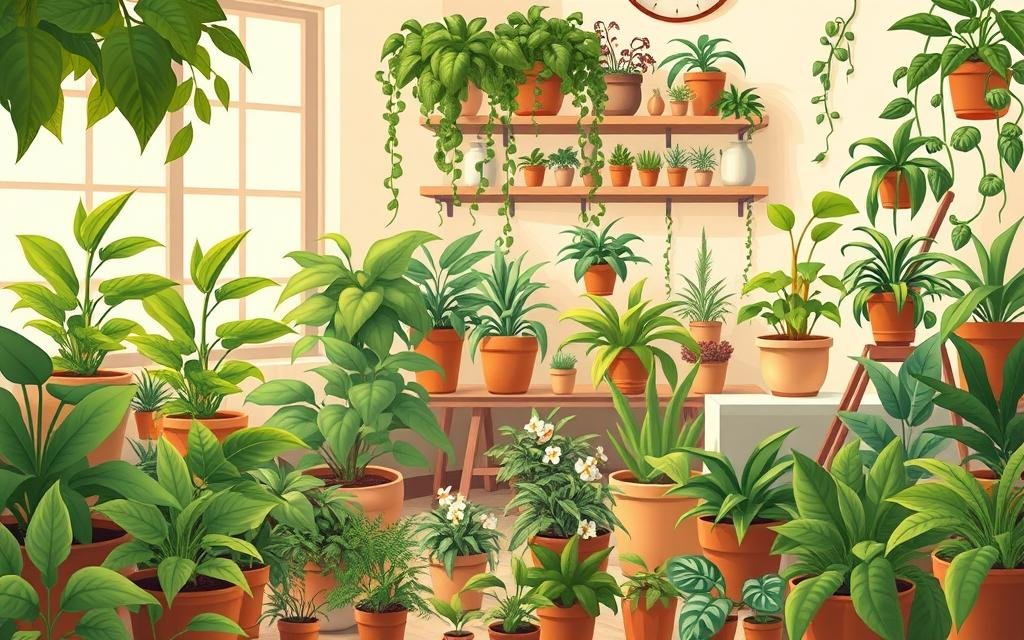
First, list all your houseplants. Note their species, age, and care needs. This helps you see your collection’s diversity and plan better. Some plants need more water, light, or humidity.
Identifying Signs of Improper Care
Look for signs of stress or bad care, like yellow leaves or pests. Catching these problems early helps avoid more damage. Common bad care signs include:
- Yellowing or browning leaves
- Droopy or wilted stems
- Pests or fungal infections
Grouping Plants with Similar Needs
After cataloging and checking for care issues, group plants by their needs. For example, put high-humidity plants together. This makes creating a care schedule easier.
| Plant Type | Watering Needs | Light Requirements | Humidity Needs |
|---|---|---|---|
| Fern | Frequent | Low to Medium | High |
| Cactus | Infrequent | High | Low |
| Peace Lily | Moderate | Medium | Medium |
Assessing and grouping your plants helps create an efficient care schedule. This makes caring for your plants easier and ensures they thrive.
Building Your Houseplant Care Schedule
Now that you’ve checked your houseplants, it’s time to make a care schedule. A good schedule helps your plants get the right care at the right time. This keeps them healthy and happy.
First, let’s talk about a weekly watering routine. Different plants need different amounts of water. So, group plants with similar needs together. For example, succulents and cacti need less water than ferns and peace lilies.
Designing a Weekly Watering Routine
When making your watering schedule, think about each plant’s needs. Check the soil moisture by sticking your finger in it up to the first knuckle. If it’s dry, it’s time to water. You can also use a moisture meter for better accuracy.
- Water plants in the morning so they can absorb the water all day.
- Avoid getting water on the leaves to prevent fungal diseases; water at the soil level instead.
- Change your watering frequency with the seasons – plants need more water in spring and summer, and less in fall and winter.
Planning Monthly Fertilization and Pruning
Along with watering, your plants need monthly fertilization and pruning. Fertilization gives them essential nutrients for growth. Pruning keeps the plant’s shape and encourages new growth.
For fertilization, use a balanced, water-soluble fertilizer. Mix it to half the recommended strength to avoid harming the roots. Prune your plants to remove dead or dying parts and shape them as you like.
Seasonal Care Tasks to Include
Some tasks are seasonal and should be part of your care schedule. For example, repotting is usually done in spring when the plant outgrows its pot. Adjust your watering schedule with the seasons, as plants dry out faster in warmer months.
Balancing Care Requirements with Your Lifestyle
It’s important to match your houseplants’ care needs with your lifestyle. If you’re away during the week, schedule care tasks for the weekends. Consider using smart irrigation systems to automate some tasks.
By making a care schedule that fits your life and meets your plants’ needs, you’ll keep them healthy and thriving. The key is to be consistent and watch how your plants respond to their care.
Tools and Methods to Maintain Your Houseplant Care Schedule
Keeping up with your houseplant care schedule is easier with the right tools and methods. It’s key to stay organized and give your plants the best care. This ensures they thrive.
Digital Apps and Calendar Systems
Digital apps and calendar systems are great for managing your plant care. Apps like Happy Plant and Plant Diary help track watering, fertilization, and pruning. They also send reminders so you never forget a care task.
Google Calendar and Apple Calendar are popular for scheduling plant care. They help you create a care plan that fits your plants’ needs.
Smart Sensors and Automated Care Systems
For a tech-savvy approach, smart sensors and automated care systems are good. They monitor soil moisture, temperature, and light. Brands like Xiaomi and Parrot offer these smart sensors.
Automated care systems can even water your plants for you. This is great for busy people or those new to plant care.
Low-Tech Solutions for Consistent Plant Care
If you like a hands-on approach, there are low-tech options. Using a physical calendar or planner works well. Sticky notes or a whiteboard can also help with reminders.
Grouping plants by care needs is another low-tech solution. Place all plants needing frequent watering together. This makes care easier in batches.
Adjusting Your Schedule Based on Plant Feedback
It’s crucial to watch how your plants react to their care schedule. If they’re not doing well, you might need to change your routine. Look for signs like yellow leaves or slow growth. These can mean your plants need more or less care.
| Tool/Method | Description | Benefits |
|---|---|---|
| Digital Apps | Apps like Happy Plant and Plant Diary | Reminders, tracking, personalized care plans |
| Smart Sensors | Devices monitoring soil moisture, temperature, and light | Real-time insights, automated adjustments |
| Low-Tech Solutions | Physical calendars, reminder systems, plant grouping | Simple, cost-effective, hands-on control |
Putting Your Smart Houseplant Care Schedule into Action
You now know what your plants need and have checked your plants. You’ve also made a care plan that fits your life. This plan uses the best tools and methods. 🌿
Your smart care plan helps you water, feed, and prune your plants just right. This keeps them healthy and makes gardening easy. By sticking to your plan, your indoor garden will soon be lush and full of life.
Keep being flexible and change your plan if needed. With practice, you’ll get better at caring for your plants. You’ll enjoy the many good things about gardening indoors.